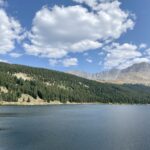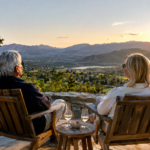
If you’re considering retiring in Arizona, Prescott is one of the more compelling destinations to evaluate, particularly for retirees relocating from California, Colorado, Phoenix, or Washington.
It combines a mild four-season climate, plenty of sunshine, lower congestion, outdoor access, and a slower pace of life without the tradeoffs that tend to follow retirees into other desirable markets.
One thing many retirees underestimate is how much their environment affects day-to-day happiness. Climate, traffic, safety, access to nature, healthcare, taxes, and the character of a local community often matter more over time than square footage or amenities alone.
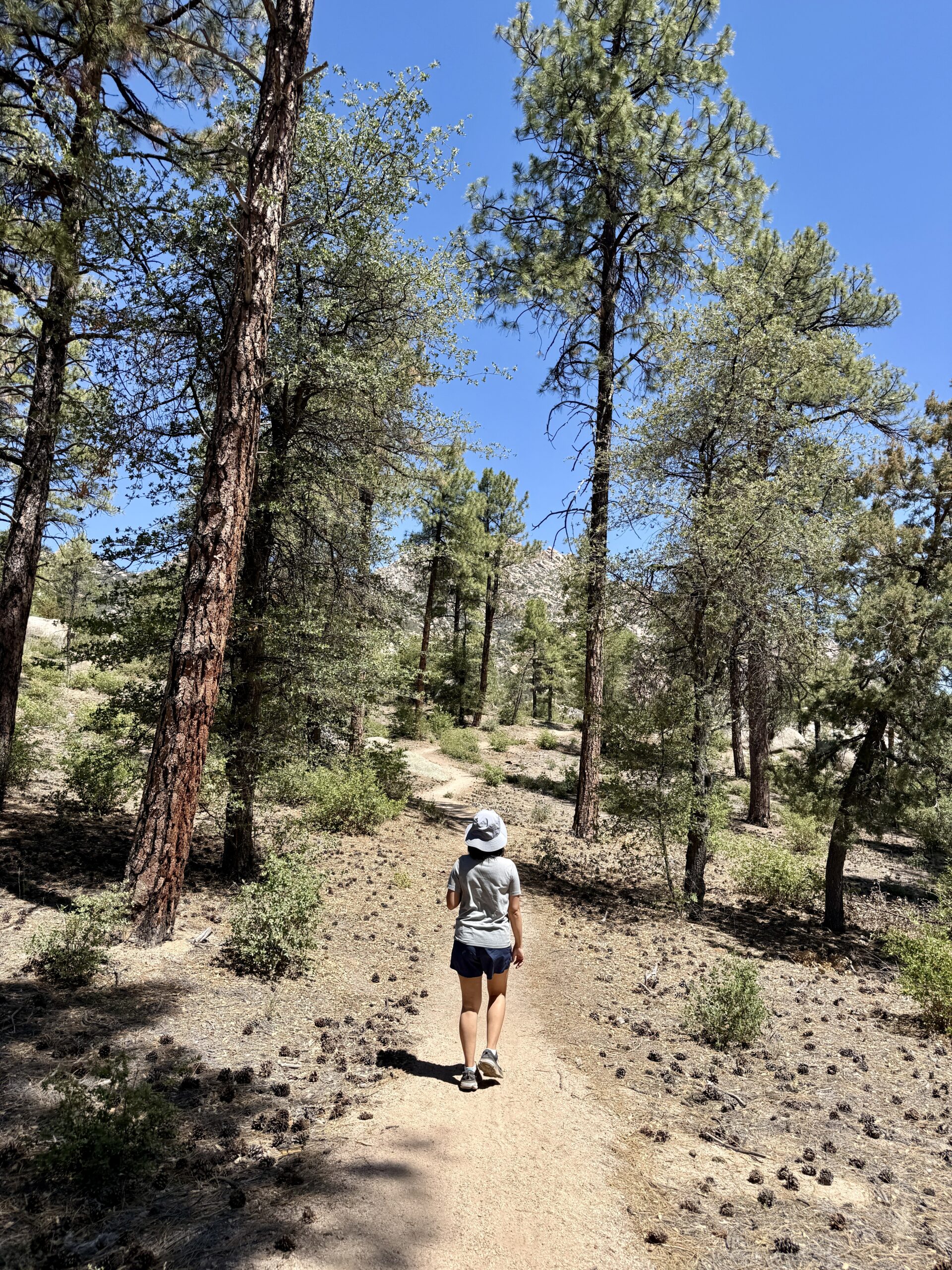
I recently spent time in Prescott hiking local trails with my wife and getting a first hand feel for what daily life actually looks like beyond what you see in typical relocation guides. I also work with clients navigating this exact type of move, including retirees relocating from higher-cost or higher-congestion areas who want a more balanced lifestyle without sacrificing access to important services.
This is the first in a series on retirement destinations I’ll be writing based on client conversations and my own travel. As a financial planner, I make it a point to spend time in the places retirees are actively considering.
Why Prescott Continues to Attract Retirees
Prescott tends to attract retirees for a combination of lifestyle stability, climate, safety, and community character. Prescott moves at its own pace, and for most retirees considering it, that is exactly the point.
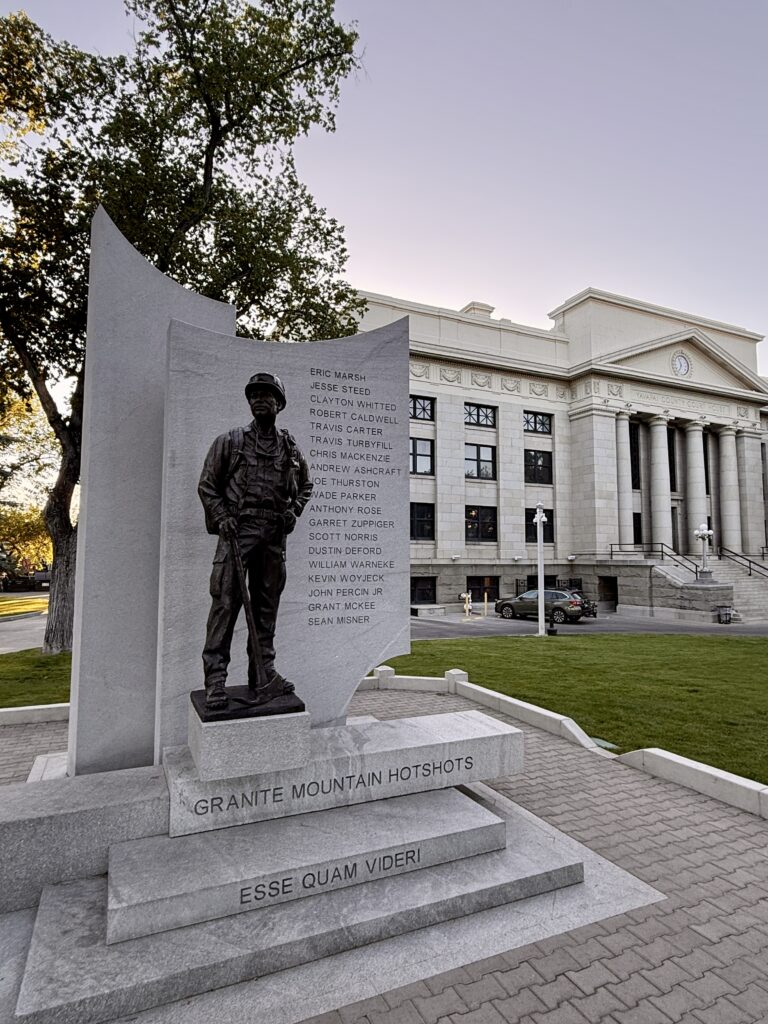
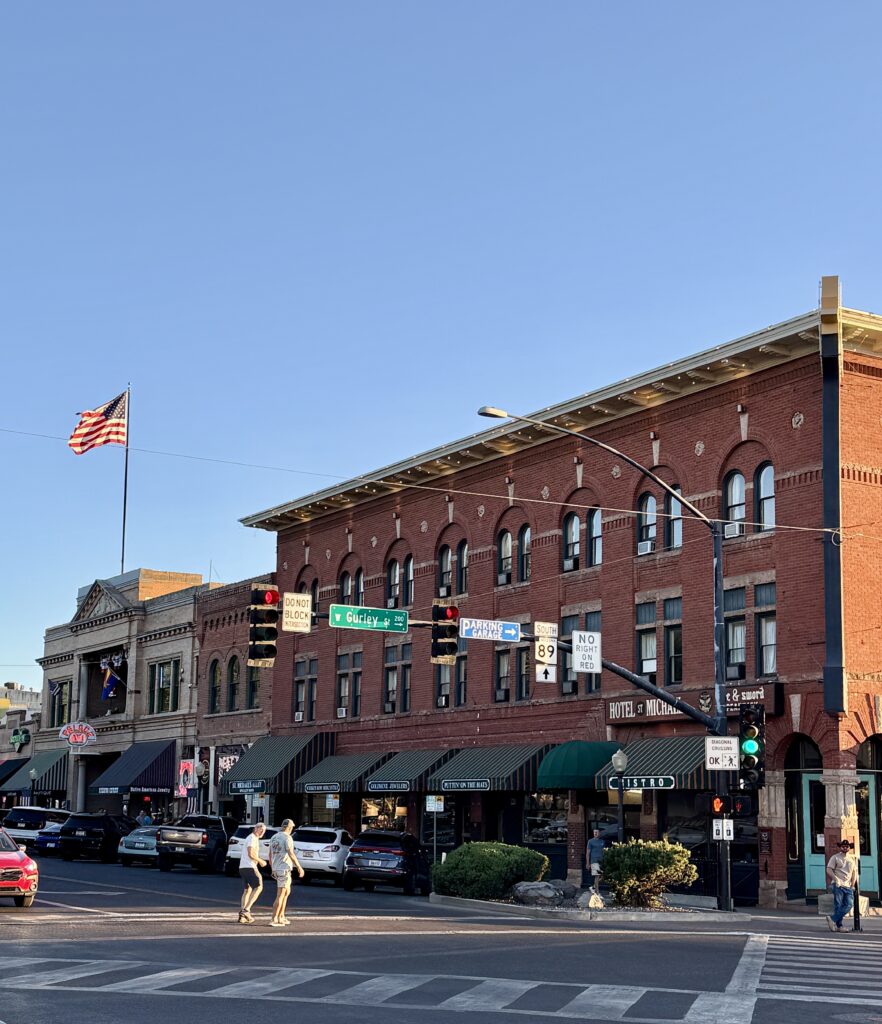
The town is centered around a historic Courthouse Plaza with an active retiree population, a strong sense of local identity, and a noticeably older demographic compared to most Arizona cities. Clubs, golf, hiking, and community events are woven into everyday life in a way that is harder to find in larger metros.
Culturally, Prescott leans more conservative than many other retirement destinations. For some retirees, particularly those relocating from larger coastal or urban markets, that is an intentional fit rather than an afterthought.
Many retirees relocating from California, Denver, Scottsdale, and Phoenix are increasingly considering Prescott because it offers something those markets rarely do: lower congestion, easier access to outdoor recreation, and a more relaxed daily rhythm without requiring a move to a genuinely remote location.
Climate and Daily Livability
Prescott sits at approximately 5,300 feet in elevation, which creates a meaningfully different climate compared to the rest of Arizona.
In practical terms: four distinct but generally mild seasons, cooler summers than Phoenix or Tucson, light snowfall in winter that rarely lingers, comfortable spring and fall seasons that extend outdoor living, and low humidity throughout most of the year.
The lack of humidity is one of the most noticeable quality-of-life factors. Even during warmer months, the air feels dry and manageable, which makes outdoor activity significantly more enjoyable compared to more humid regions. This affects daily comfort, sleep quality, and how consistently you actually spend time outside.
Prescott also sits in USDA growing zone 7b. Compared to Colorado, this allows for a much wider range of year-round gardening. Even plants like rosemary can survive outdoors through winter, which sounds minor until it becomes a meaningful part of how you spend your time.
For retirees comparing Prescott to Denver specifically, the differences are notable: less congestion, easier trail access, milder winters, lower humidity, and a less intense population density overall.
Access to Nature and Outdoor Lifestyle
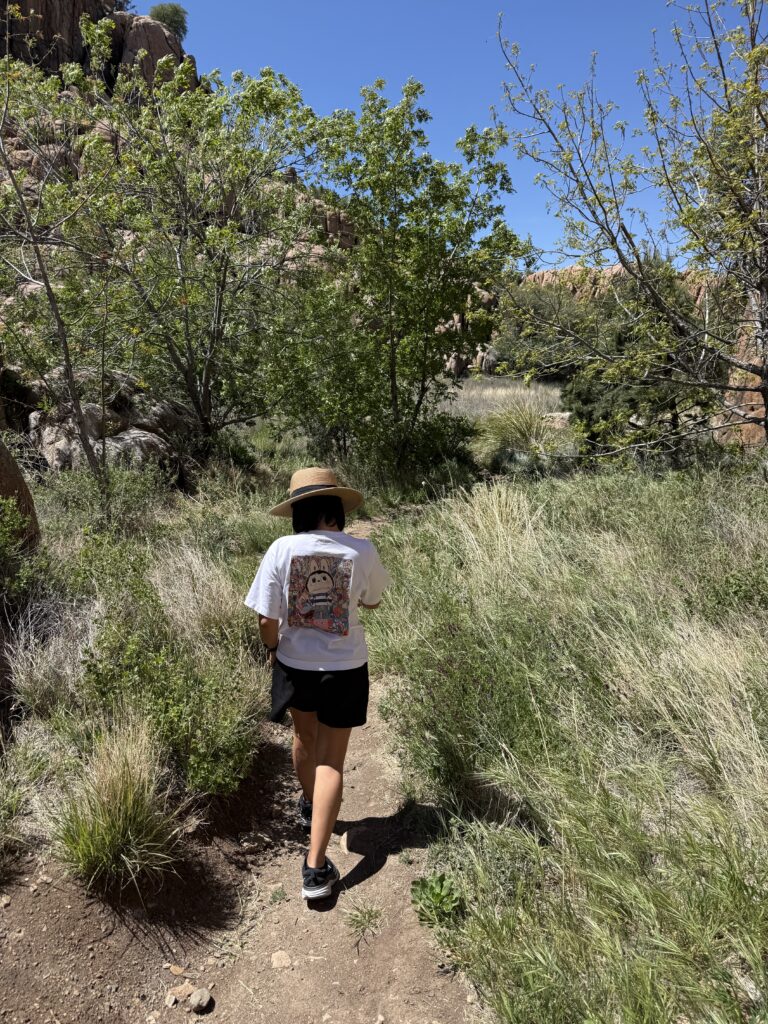
One of Prescott’s most practical advantages is how quickly you can get from town to quiet natural space. Within 10 to 15 minutes of downtown, you can be on a trail with very few other people. That level of access is increasingly rare in desirable retirement regions.
Key outdoor features include Watson Lake and Willow Lake for walking, kayaking, and photography, the Granite Dells rock formations integrated directly into the town, extensive hiking and biking trail systems, and easy day trips to Sedona, Flagstaff, and Jerome.
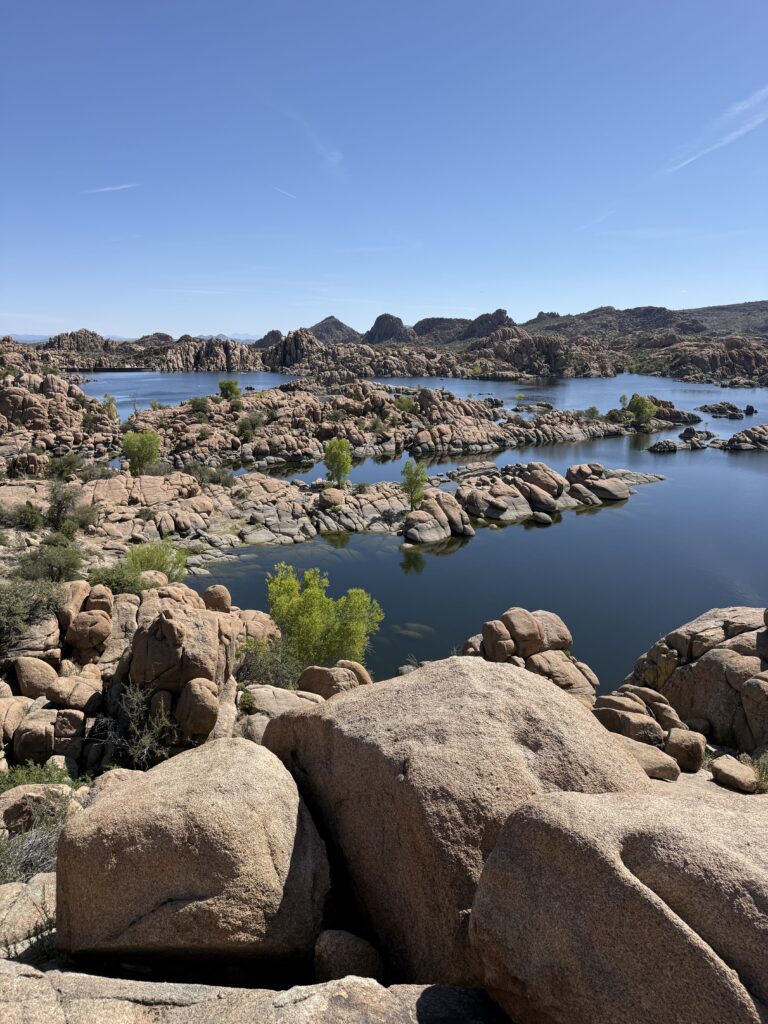
For retirees who prioritize outdoor activity, this is one of Prescott’s defining characteristics.
Everyday Convenience and Local Infrastructure
Beyond the scenery, Prescott is genuinely practical for everyday living. You will find national retailers including Trader Joe’s and Costco, which matters more than it sounds when you are thinking about long-term livability without constant drives to a larger city.

Prescott Valley, adjacent to Prescott, continues to see steady development including new housing and commercial expansion, which is gradually improving inventory and accessibility.
The local community is also notably friendly in everyday interactions. For retirees considering a permanent move, that kind of environment adds up over time.
Housing Market Reality
Average home prices in Prescott typically run around $600,000 depending on property type and location. That is relatively high compared to many smaller retirement towns, and it reflects demand from retirees and out-of-state relocators rather than local income levels.
Prescott is best understood as a lifestyle-driven housing market. That said, compared to desirable parts of California or Scottsdale, it can still represent a meaningful reduction in both housing cost and overall pace of life.
Healthcare Access
Specialist access is more limited than in a larger metro, and some retirees do notice longer wait times for certain care. For routine needs and general medical care, local infrastructure is solid.
The key practical advantage is proximity to Phoenix, approximately two hours by car, which provides access to major hospital systems and a full range of specialists. For more complex or ongoing care needs, that proximity is an important planning consideration rather than a liability.
Transportation and Accessibility
Prescott offers more connectivity than many similarly sized mountain towns. There is a regional airport with direct flights to hubs including Denver and Los Angeles, a Groome Transportation shuttle with scheduled service to Phoenix Sky Harbor, and roughly two hours of driving access to Phoenix for full international travel or Flagstaff for additional regional options.
This combination makes it realistic to maintain flexibility without committing to a large metro area.
The Financial Side: Taxes and Retirement Planning
Arizona is often described as tax-friendly for retirees, but the full picture requires context.
Arizona does not tax Social Security benefits, which is a meaningful advantage for most retirees relying on fixed income. The state uses a relatively simple flat income tax structure, which tends to be more predictable than higher-tax states. That said, retirement income from IRAs, 401(k) accounts, and pensions is still subject to state income tax.
Property taxes are generally moderate but vary by county and local jurisdiction. Some limited relief programs exist for qualifying retirees, though they are not automatic or universal.
Arizona also does not impose a state estate or inheritance tax, which can be a relevant factor in longer-term wealth transfer planning.
From a planning standpoint, Prescott tends to work best for retirees relocating from higher-tax states who are focused on improving after-tax cash flow while maintaining a strong lifestyle outcome. Arizona won’t win a race-to-the-bottom tax comparison, but with a well-structured withdrawal strategy it can be a genuinely efficient state for retirement income.
Who Prescott Is Best Suited For
Retirees who do well in Prescott are generally optimizing for lifestyle stability, outdoor access, and a slower daily rhythm rather than cost or convenience.
Strong fit for retirees who want:
- A safer, lower-congestion environment
- Access to nature without extreme heat
- Low humidity and four-season living
- A community-oriented retirement lifestyle
- A balance between comfort and quality of life
May be less suitable for those who prefer:
- Large metro-scale entertainment and nightlife
- Year-round hot desert climates
- Ultra-low-cost retirement markets
- A career-focused environment for younger family members
Final Perspective
For many retirees, especially those coming from California, Colorado, Scottsdale, or higher-stress metro areas, Prescott represents a meaningful improvement in day-to-day living while still maintaining reasonable access to healthcare, travel, and essential services.
From a financial planning perspective, where you live in retirement is not just a lifestyle decision. It directly affects your spending rate, tax liability, investment withdrawals, and long-term financial flexibility. Prescott deserves to be evaluated as part of that larger picture, not just as a place that looks appealing on paper.
If you’re considering retirement in Prescott and want to think through how it fits your overall financial plan, I’m happy to help.
Gabriel Motta is a fee-only financial planner and the founder of Inclinevest. He works with retirees and pre-retirees on retirement income, tax strategy, investment management, and long-term financial planning.