
Most investment approaches force a tradeoff you shouldn’t have to make: broad diversification with rigid, tax-costly rebalancing, or concentrated stock-picking dressed up as strategy. For clients investing significant assets in taxable accounts, we take a different approach, one built on decades of academic research into what actually drives long-term returns.
Peer-reviewed research consistently points to certain characteristics, smaller companies, more profitable companies, and attractively priced companies, as sources of higher expected returns over time. Where appropriate, we tilt portfolios toward these dimensions systematically, not by guessing which stocks will win, while remaining broadly diversified across thousands of holdings.
Just as important is what we don’t do. Traditional index funds rebalance on a fixed schedule regardless of tax consequences. For clients in higher tax brackets with meaningful taxable holdings, we treat every rebalancing decision as a tax decision first. That means using cash flows, dividends, and natural trading activity to drift portfolios back toward target, and waiting for a tax-advantaged moment, like a loss to harvest or a lower-income year, rather than triggering unnecessary capital gains just to hit a calendar date.
The result is a portfolio strategy calibrated to your bracket and your account type, not a one-size-fits-all model applied regardless of the tax consequences.
We don’t react to headlines, chase trends, or try to predict short-term market movements.
Instead, our approach is grounded in decades of academic research and real-world evidence.
Markets are unpredictable in the short term, and we expect volatility. Bear markets have historically occurred about once every 3-4 years, but over time, disciplined investors are rewarded. The key is not trying to outguess the market, it’s following a structured strategy built on principles that have consistently worked.
At Inclinevest, we focus on what can be controlled:
It depends on your allocation, goals, time horizon, and risk tolerance.
We can show you historical return data for different portfolio allocations, but past performance is a reference point, not a prediction. Actual results will vary based on the investments used, market conditions, and your personal circumstances.
Most clients don’t hire us to make them the most money possible. If that were the goal, we wouldn’t diversify. We would concentrate assets in a handful of high conviction bets and accept substantially more risk along with it.
What most clients actually want is a strong return within their personal risk tolerance, paired with a financial plan that helps them make better decisions over time.
That is where I believe an advisor’s value comes from. Not predicting markets, but helping clients build and maintain a strategy that fits their goals and gives them the highest probability of long term success.
We cannot promise you a return number, and I would not trust anyone who does. What I can offer is a plan built around your goals and risk tolerance, one that helps you stay invested through the cycles that actually determine your results.


The primary driver of long-term performance comes from how your portfolio is structured across asset classes.
Market prices reflect available information. Consistently outperforming markets through prediction is unlikely.
Your portfolio is tailored to your goals, timeline, and financial situation — not a one-size-fits-all model.
We combine the efficiency of passive investing with selective active strategies where they add value, and we stay opportunistic when markets give us a reason to act.

Investment decisions should never be made in isolation — taxes play a critical role in long-term outcomes.
Trying to time the market often leads to missed opportunities.
Even missing a small number of strong market days can significantly impact long-term results.
Our role is to help you stay on track when uncertainty makes that difficult.

These visuals highlight key principles for long-term investors.
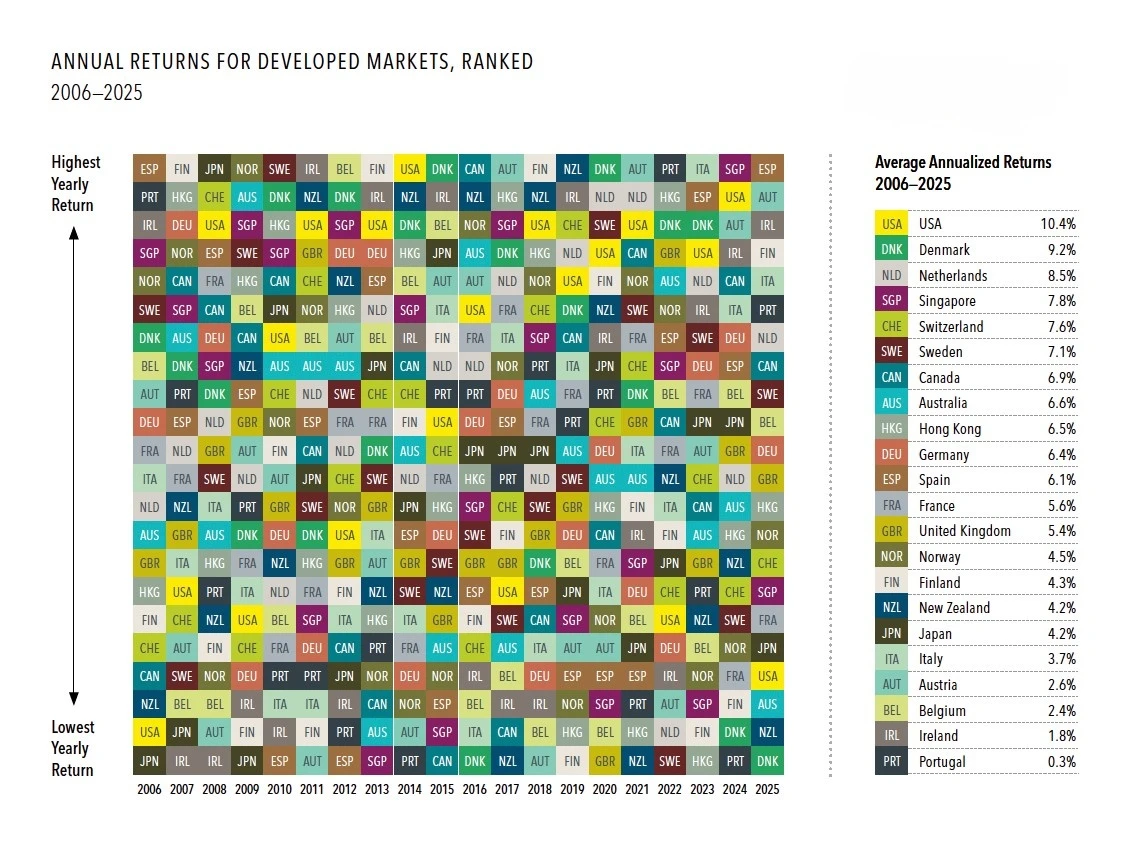
The Randomness of Global Stock Returns
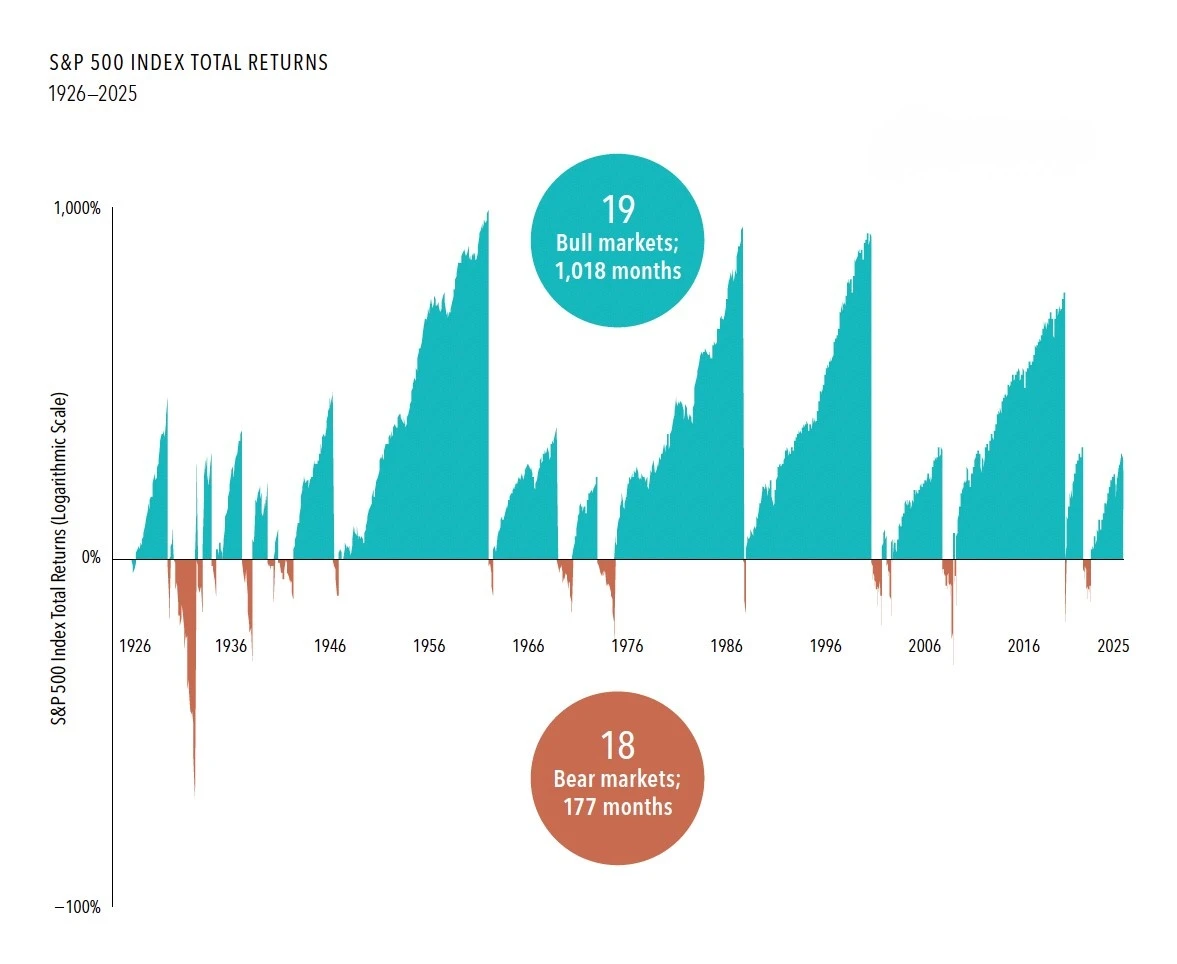
Bulls, Bears, and Long-Term Benefits of Stock Investing

If you want an investment strategy aligned with your retirement plan, tax situation, and long-term goals, the first step is a simple conversation.
No obligation. Just a conversation.