

Retire in Colorado: The Complete 2026 Guide
Retirement Planning · Colorado Guide · 2026
I grew up in Brooklyn, NYC. For most of my life, open space meant a park. Mountains were something in movies. I moved to Colorado and spent the next several years realizing that I had been missing something significant. The trails here are so numerous and varied that a person cannot hike them all in a lifetime. The road trip options are the same way. You can drive two hours in any direction and land somewhere genuinely different from where you started.
I am a fee-only financial planner based in Greenwood Village. Most of my clients are pre-retirees and retirees who are either already in Colorado or seriously considering the move. I work with the numbers every day and I also live here. The sunshine, the altitude, the winters, the trail access, the drive to Durango or Telluride or the San Luis Valley on a Saturday morning. That context shapes how I think about retirement planning in this state.
This guide covers what I actually tell clients. Real costs, specific tax rules, what weather is like across different parts of the state, and how to build a retirement income plan that holds up under pressure.
WHY PEOPLE RETIRE TO COLORADO
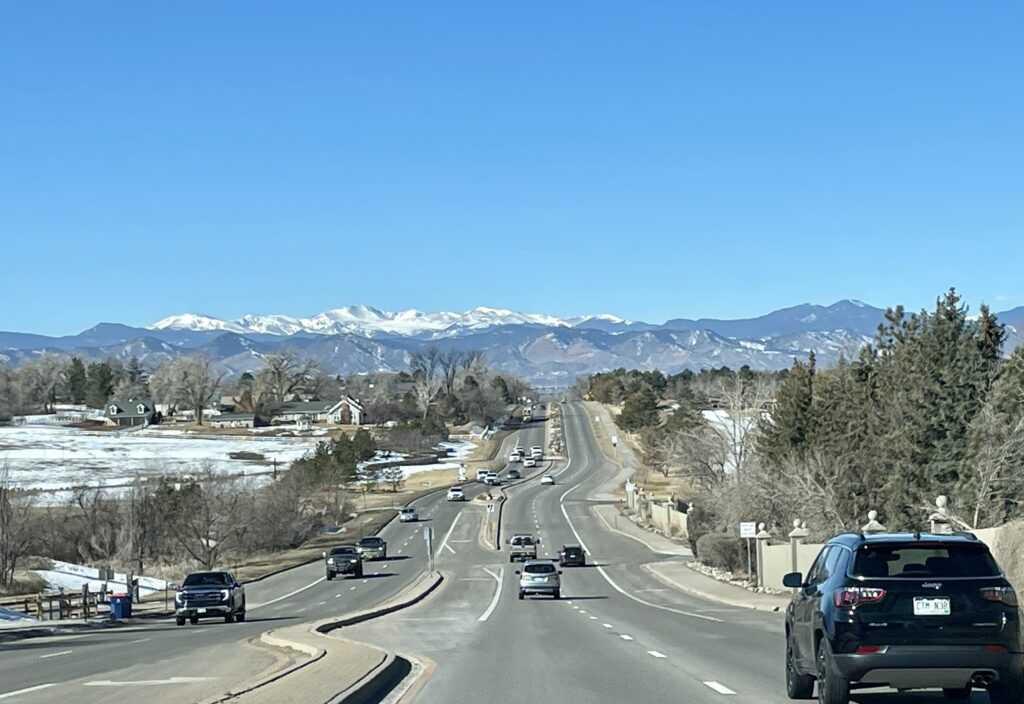
Colorado gets 300 days of sunshine per year. Not 300 clear days. 300 days where the sun appears, including in the middle of winter storms that clear out by afternoon. Coming from Brooklyn, where gray November skies can run for two weeks without a break, that alone was a revelation.
The road trip options are a category unto themselves. From Greenwood Village you can reach Rocky Mountain National Park in under two hours, the San Juan Mountains in four, Mesa Verde in five, Arches in six. There are towns across this state that most Coloradans have never visited. A retiree with time and a reliable car can spend years just covering the state, and many do exactly that.
The trail network is genuinely unlimited. Colorado has over 26,000 miles of hiking trails across national forests, state parks, wilderness areas, and open space preserves. Experienced hikers who move here will discover within the first year that they cannot see all of it in one lifetime. There is always another canyon, another 14er, another trail system an hour away that nobody talks about.
Most people moving to Colorado for retirement arrive from California, Texas, Illinois, Washington, and the Northeast. California and Pacific Northwest retirees often cite lower housing costs relative to their origin market and a desire to extend their retirement assets further. Midwest retirees come for the sunshine and to leave behind brutal winters. East Coast retirees are often following family, or following a sense that there is more life available outside the urban corridor.
Colorado is not cheap. It is less expensive than coastal California or New York, but it is not a low-cost retirement destination. Retirement planning here requires precision.
What Colorado delivers: More sunshine than Miami. More trail access than any single lifetime can cover. World-class ski areas within 90 minutes of Denver. A healthcare ecosystem anchored by UCHealth, SCL Health, and Children’s Hospital Colorado. And a pace of life that people who move here rarely want to trade back.




COLORADO WEATHER: WHAT IT IS ACTUALLY LIKE
The 300-days-of-sunshine number is accurate, and its effect on daily life is real. A snowstorm hits Denver on Tuesday, and by Thursday the snow is gone and people are eating outside. That cycle repeats all winter. It is what separates Front Range winters from Midwest winters, and it is something you feel rather than measure.
Altitude is the variable that surprises people most. Denver is at 5,280 feet. Colorado Springs is at 6,035 feet. Mountain towns like Breckenridge sit at 9,600 feet. Altitude affects energy levels, sleep quality, and for some people, cardiovascular function, particularly in the first weeks after arriving from sea level. Most healthy adults adjust within a few months. People with serious heart or lung conditions should speak with a physician before committing to high-altitude living.
Seasonal breakdown for the Denver metro:
Winter (28-50°F): Denver metro. Cold snaps. Snow melts within days. Mountain areas significantly colder.
Spring (38-65°F): Variable. Can snow in April. But by May, the trails are opening and wildflowers are everywhere.
Summer (65-95°F): Warm and dry. Afternoon thunderstorms typical. Evenings cool. Almost no humidity.
Fall (42-72°F): Outstanding. The aspens turn gold in September. October is stunning. Snow begins late October.
Denver Metro vs Mountain Towns vs Plains
The Denver-Boulder-Fort Collins corridor benefits from a Chinook wind pattern that regularly pushes temperatures 20 to 30 degrees above what the national forecast shows. A Denver January average of 30°F on paper translates to many days in the 50s and 60s in practice. Plains communities east of Denver, including Parker, Aurora, and Elizabeth, can be slightly windier but follow the same general pattern.
Mountain towns are a different situation. Breckenridge, Telluride, Steamboat Springs, and similar destinations have genuinely hard winters: extended periods below freezing, significant snow accumulation, and real isolation when storms close mountain passes. They are worth visiting every season. For full-time retirement, particularly past age 70, proximity to healthcare, emergency services, and airport access becomes a serious planning variable.
Pueblo and the southern communities tend to be warmer and drier than Denver through winter. Grand Junction on the Western Slope has fewer cold days and lower snowfall than the Front Range. For retirees who place heavy weight on climate, both markets deserve a close look.
Clients who relocate from the Midwest or Northeast often comment in their first Colorado winter that January feels different. They have more energy. They spend more time outside. The sun in February here is not a minor thing. It is something you build a lifestyle around.
WHAT RETIREMENT ACTUALLY COSTS IN COLORADO
There is no single retirement number for Colorado, or for anywhere. The right number depends on spending structure, where you live in the state, whether you carry a mortgage, and how many years sit between early active retirement and later stages when spending patterns shift.
These tiers reflect the ranges I see regularly working with Colorado pre-retirees and retirees:
Moderate lifestyle — $70,000-$110,000/year (approximately $1M-$1.8M invested)
- Paid-off home
- Moderate travel (1-2 trips/year)
- Good healthcare coverage
- Dining out occasionally
- No significant family support
- Modest discretionary spending
Comfortable / upper-middle — $120,000-$180,000/year (approximately $2M-$4M invested)
- 3-5 trips per year including international
- Helping adult children or grandchildren
- Golf, skiing, active hobbies
- Some second-home aspirations
- Strong healthcare flexibility
- Real tax-planning opportunities
High-end lifestyle — $250,000+/year ($5M+ invested)
- Luxury travel
- Multiple properties
- Significant charitable giving
- Private clubs or extensive recreation
- Large gifting to family
- Complex estate planning needs
The households that struggle in retirement are rarely the ones who saved too little. They are the ones who underestimated the first ten years, when they are healthiest, most active, and spending the most.
Retirees who move to Colorado often find that first decade is more expensive than they projected. The time is finally there to travel, ski, hike, and visit family scattered across the country. Planning around a spending decline that begins at 65 is a consistent modeling error.
HOUSING COSTS IN COLORADO
Housing drives the largest cost differences between Colorado retirement scenarios. Whether you own outright, carry a mortgage, downsize, or relocate from out of state shapes your income requirements more than almost any other variable.
Ongoing costs even with a paid-off home:
- Property taxes: typically $2,400-$5,000/year in the Denver south metro on a $500K-$800K home
- Homeowner’s insurance: $1,500-$3,000/year, higher in wildfire-adjacent areas
- HOA dues in managed communities: $300-$900/month
- Routine maintenance: often 1-2% of home value annually
- Snow removal and landscaping
- Roofing and exterior replacements, which are common in Colorado’s hail-prone climate
Hail insurance — a Colorado-specific cost: Colorado ranks among the top states for hail damage year after year. Insurance premiums in the Denver metro and Front Range have risen sharply over the past decade. Areas near the Palmer Divide have seen premiums double in some cases. Budget $3,000-$5,000/year in homeowner’s insurance on a high-value Front Range property.
Downsizing Decisions in Colorado
Selling a larger Denver-area home to downsize is a planning event with tax implications. A home purchased at $300K now worth $750K may generate a capital gain. The federal exclusion of $500K for married couples covers many situations, but gains above that threshold are taxable. The timing of the sale relative to retirement income in the same year affects the tax outcome.
Lock-and-leave condos and patio homes are the primary choice for Denver-area retirees looking to reduce maintenance burden while retaining the ability to travel. These range from $500K-$900K in communities like Greenwood Village, Centennial, and Lone Tree, with HOA fees of $400-$800/month covering exterior maintenance, landscaping, and snow removal.

COLORADO TAXES IN RETIREMENT: THE FULL PICTURE
Tax planning is where I see the largest gap between households that feel financially confident in retirement and those that feel perpetually behind. Colorado’s treatment of retirement income is favorable in some categories and more costly in others. Most articles covering this topic leave out details that matter.
Key numbers at a glance:
State income tax rate: 4.4% flat. No brackets. Applies to most taxable income after deductions.
Social Security: Not taxed at the state level. One of the most significant advantages for retirees here.
Pension / IRA deduction (age 65+): Up to $24,000. Taxpayers 65 and older may deduct up to $24,000 of qualifying pension and retirement income from Colorado taxable income (2026).
Property tax effective rate: 0.4-0.6%. Among the lower effective property tax rates nationally. A $600K home typically generates $2,400-$3,600/year.
Sales tax (state + local): Approximately 7-10%. Colorado’s state rate is 2.9%. Local jurisdictions add significantly. Denver total is around 8.81%. Groceries and prescription drugs are generally exempt.
Estate / inheritance tax: None. Colorado has no state estate tax or inheritance tax. Federal estate tax exemptions apply at the federal level only.
SOCIAL SECURITY TAXES IN COLORADO: THE BEST RETIREMENT TAX ADVANTAGE
Colorado does not tax Social Security benefits at the state level. This separates Colorado from the 11 states that tax Social Security income in some form, and it is a meaningful advantage for households where Social Security represents a large share of retirement income.
Federal taxation of Social Security still applies based on combined income. For most retirees with moderate investment portfolios, between 50% and 85% of Social Security benefits will be subject to federal income tax. That is a federal rule that applies regardless of which state you live in, but it interacts with Roth conversion planning and withdrawal sequencing in ways that compound significantly over a long retirement.
The 85% threshold most retirees hit: When combined income exceeds $44,000 for a married couple (adjusted gross income plus non-taxable interest plus half of Social Security), up to 85% of the Social Security benefit becomes federally taxable. Most retirees with portfolios above $1M cross that line. The strategy is not to avoid Social Security taxation entirely but to manage total taxable income through Roth conversions and withdrawal sequencing before RMDs begin.
PENSION INCOME AND IRA WITHDRAWALS: WHAT COLORADO ACTUALLY TAXES
Colorado taxes IRA withdrawals, 401(k) distributions, and most pension income as ordinary income. The 4.4% flat rate applies after deductions. This catches some retirees off guard who assumed a state with no Social Security tax would treat all retirement income similarly.
Pension, IRA, and annuity income (age 65+): Colorado allows taxpayers age 65 and older to deduct up to $24,000 per person of qualifying pension, annuity, and IRA income included in federal taxable income. Social Security benefits receive separate favorable treatment.
How Colorado taxes each income source:
Social Security: Not taxed at the state level. At the federal level, 0-85% is taxable depending on combined income.
Traditional IRA / 401(k) withdrawals: Fully taxable federally. Taxable in Colorado after the $24,000 deduction at age 65+.
Roth IRA withdrawals: Not taxed federally or at the state level for qualified distributions. The tax-free advantage compounds over decades.
PERA pension (state employees): Fully taxable federally. Taxable in Colorado after the $24,000 deduction at age 65+. PERA income qualifies for the deduction.
Military pension: Taxable federally. Colorado fully exempts military retirement pay from state income tax.
Long-term capital gains: Taxed at 0-20% federally. Colorado does not have a preferential capital gains rate — 4.4% applies.
Roth conversion income: Fully taxable in the year converted at both the federal and state level (4.4% after deductions). The tradeoff: pay tax now to reduce future RMDs and tax exposure.
The RMD trap that catches unprepared retirees: A household with $1.5M in a traditional IRA at retirement will face Required Minimum Distributions beginning at age 73. By then, a portfolio that has grown to $2M+ can generate $80,000-$110,000 in forced taxable income annually. That income stacks on top of Social Security, pushes more of it into taxation, and can trigger Medicare IRMAA surcharges. The window between retirement and age 73 is the most valuable Roth conversion period available. Most households do not use it. A retirement income plan needs to address this directly.
COLORADO PROPERTY TAXES: LOWER THAN MOST STATES
Colorado’s effective property tax rate on residential properties typically falls between 0.40% and 0.60% of assessed value. That is among the lowest rates in the country, and it is a real financial advantage for retirees comparing Colorado against states like Illinois (2.2%), New Jersey (2.2%), Texas (1.7%), or New York (1.5%).
Colorado property taxes are calculated by applying a mill levy to the assessed value of the property, which for residential properties is set as a percentage of market value. Subsequent legislation has adjusted the specific calculation since the Gallagher Amendment was repealed in 2020, but the overall result remains relatively low residential tax rates compared to national averages.
Estimated annual property taxes in Colorado:
$400,000 home: $1,600-$2,400/year ($133-$200/month)
$600,000 home: $2,400-$3,600/year ($200-$300/month)
$800,000 home: $3,200-$4,800/year ($267-$400/month)
$1,000,000 home: $4,000-$6,000/year ($333-$500/month)
Colorado also offers a Senior Homestead Exemption for qualifying residents age 65 and older who have owned and occupied their primary residence for at least 10 years. This exempts 50% of the first $200,000 of assessed value, which can reduce the annual property tax bill by several hundred dollars. Not all households qualify, and the exemption must be applied for — it is not automatic.
How Colorado compares to states retirees are leaving: A California retiree moving from a $1.2M Bay Area property might be paying $12,000-$18,000/year in property taxes despite Prop 13 protections. A Texas retiree might be paying $14,000-$20,000/year on a $700K Dallas home. The same-value home in the Denver south metro typically generates $3,000-$5,000/year in property taxes. For retirees doing the state-by-state comparison, this is one of Colorado’s clearest financial advantages.

HEALTHCARE COSTS IN COLORADO RETIREMENT
Healthcare is one of the two or three largest expenses in retirement, and it is consistently underestimated. Colorado has excellent healthcare infrastructure, particularly in the Denver metro, with nationally ranked hospital systems and strong specialist access. The cost challenge is not quality — it is premiums, deductibles, and the gap period before Medicare.
Pre-Medicare (Ages 60-64): The Most Expensive Healthcare Years
Retiring before 65 means purchasing health insurance through the ACA marketplace. For a couple both under 65 in Colorado in 2026, ACA premiums for a silver plan in the Denver metro can range from $800 to $2,500+ per month depending on income. A bronze plan will be cheaper on premiums but carry higher deductibles and out-of-pocket maximums.
The income-managed ACA strategy: ACA premium subsidies are available to households with income below 400% of the federal poverty level (roughly $80,000 for a couple in 2026). A couple retiring at 60 with $1.5M in traditional IRA assets can often control their taxable income through careful withdrawal planning and receive significant premium subsidies during the pre-Medicare gap years — potentially reducing monthly premiums to $300-$600/month. This is one of the most powerful early-retirement planning levers available, and it is explicitly worth modeling before choosing your retirement date.
After Medicare (Age 65+)
Medicare provides core coverage, but a complete Medicare strategy involves several layers. Most financially comfortable retirees choose a Medigap (Medicare Supplement) plan paired with a standalone Part D prescription drug plan, rather than Medicare Advantage. The Medigap approach offers more predictable costs and far greater provider flexibility — important if you travel, spend time in multiple states, or want access to the best specialists.
- Medicare Part B premium (2026): approximately $185/month per person, higher for higher-income retirees (IRMAA surcharges begin at $103,000 individual / $206,000 joint income)
- Medigap Plan G: typically $130-$220/month per person in Colorado
- Part D prescription drug coverage: $30-$100/month per person
- Dental, vision, and hearing: $50-$200/month or self-insured
A realistic all-in Medicare budget for a couple — Part B, Medigap, Part D, dental/vision — runs $12,000-$18,000/year. And this is before any long-term care exposure.
Long-Term Care: Colorado’s Growing Challenge
Colorado’s long-term care costs have risen substantially in recent years. A private room in a memory care facility in the Denver metro now averages $90,000-$130,000/year. Home health aide services run $25-$45/hour. For a couple both in their 60s with a combined life expectancy that might extend into their 90s, the probability that at least one will require extended care is significant — actuarial estimates typically put it at 50-70% for people reaching their mid-60s in good health.
This is a major planning variable that belongs in every retirement income plan, not as a footnote but as a core scenario. Options include traditional long-term care insurance (increasingly expensive), hybrid life/LTC products, self-insurance through a dedicated asset bucket, and Medicaid planning for lower-asset households.
THE RETIREMENT INCOME MATH
Most people think about retirement readiness in terms of a portfolio balance. Retirement is really an income problem. You need reliable, tax-efficient cash flow that covers your spending without depending on favorable market conditions in any given year.
The calculation that actually matters: What does your portfolio need to generate each year, after accounting for Social Security, pension income, and any other guaranteed income sources?
Monthly spending / Annual spending / Social Security (couple estimate) / Portfolio gap / Portfolio needed*
$6,000 / $72,000 / $36,000 SS / $36,000 gap / $800K-$1.2M needed
$8,000 / $96,000 / $36,000 SS / $60,000 gap / $1.2M-$1.8M needed
$10,000 / $120,000 / $44,000 SS / $76,000 gap / $1.5M-$2.3M needed
$12,000 / $144,000 / $44,000 SS / $100,000 gap / $2.0M-$3.0M needed
$15,000 / $180,000 / $52,000 SS / $128,000 gap / $2.6M-$4.0M needed
$20,000 / $240,000 / $60,000 SS / $180,000 gap / $3.5M-$5.5M needed
*Portfolio estimates use a 4-5% withdrawal rate range. Taxes, spending flexibility, and asset allocation affect actual requirements significantly.
WITHDRAWAL STRATEGY: BEYOND THE 4% RULE
The 4% rule is the most commonly cited retirement planning guideline. Withdraw 4% of your portfolio in year one, adjust for inflation each year, and historical research suggests the portfolio lasts 30 years. It is a useful starting framework. It is not a retirement income plan.
The 4% rule was developed in the 1990s based on historical U.S. market returns and does not account for your retirement age, tax situation, spending flexibility, the specific composition of your accounts, Social Security timing, or market valuations at the time you retire. Someone retiring at 58 faces a very different risk profile than someone retiring at 67, and both face a different risk environment than the historical data assumed.
What most modern retirement plans use instead: A guardrails strategy establishes a spending range rather than a fixed withdrawal rate. If the portfolio grows, spending can rise modestly. If the portfolio declines significantly, spending decreases. This flexibility — even a modest ability to reduce spending by 5-10% in a bad market year — dramatically extends portfolio durability compared to a rigid fixed withdrawal. The households that run out of money in retirement models are almost always those with zero spending flexibility.

RETIREMENT RISKS MOST PRE-RETIREES UNDERESTIMATE
01 — Sequence of returns risk
This is the risk that gets the least attention and causes the most damage. If markets decline significantly in the first three to five years of retirement while you are making withdrawals, you sell shares at low prices that never recover in your portfolio. The same lifetime average return produces very different outcomes depending on when the bad years fall. A 30% market decline in year two of retirement is categorically different from the same decline in year twenty.
02 — Inflation over a 30-year retirement
$10,000/month in spending today is not $10,000/month in 2056. At 3% annual inflation, it becomes $16,000/month. At 4%, nearly $22,000/month. Healthcare and long-term care costs have historically inflated faster than the general CPI. A retirement income plan that doesn’t model inflation explicitly is not a plan.
03 — RMD bracket creep and Medicare surcharges
Required Minimum Distributions beginning at age 73 force withdrawals from traditional accounts whether you need the money or not. A well-funded retiree with $2M in a traditional IRA will face RMDs of $75,000-$130,000/year by their late 70s — pushing Social Security into higher taxation tiers, triggering Medicare IRMAA surcharges, and potentially moving into higher federal brackets. This is addressable with Roth conversion planning before 73. It is largely irreversible after.
04 — Healthcare shocks and long-term care
A single significant medical event — a stroke, a cancer diagnosis, a cognitive decline requiring professional care — can generate $50,000 to $150,000+ in annual costs that no Medicare plan fully covers. Long-term care is a retirement risk that belongs in every plan, not just those of people who feel old. The best time to address it is in your early-to-mid 60s when coverage is still available and affordable.
05 — Longevity: a 35-year retirement is real
Many Colorado retirees today retiring at 62-65 in good health will live into their 90s. A plan designed to last 25 years fails 10 years early. Longevity changes Social Security claiming strategy, asset allocation, Roth conversion urgency, and long-term care planning. A joint plan for a couple needs to account for the probability that one spouse outlives the other by a decade or more — often meaning the surviving spouse needs significant resources at the very end.
06 — Family financial support: the unplanned expense
In my experience, financial support for adult children and grandchildren is one of the most underestimated budget categories in retirement. It is rarely planned explicitly, and it is often the item that quietly erodes portfolios that looked sufficient on paper. Being clear-eyed about your giving intentions — and building them into the plan — matters.
BEST PLACES TO RETIRE IN COLORADO
The right Colorado city depends on what you are optimizing for. Here is an honest breakdown of the primary options, informed by my work with clients across the state.
Denver — Urban core, walkable neighborhoods, everything close If you want a true urban retirement, Denver delivers. Walkable neighborhoods like Wash Park, Stapleton, and Lowry, a strong restaurant and arts scene, light rail access, and world-class healthcare within a short drive. Housing costs have climbed significantly, with most single-family homes in desirable neighborhoods running $600K-$1M+. The tradeoff is traffic, density, and urban complexity. For retirees who want city life without sacrificing access to the mountains, Denver proper earns a serious look.
Aurora — Lower cost, but know what you are getting into Aurora is Denver’s eastern neighbor and Colorado’s third-largest city, with a population of around 400,000. It offers meaningfully lower housing costs than Denver proper, good healthcare access through UCHealth and Children’s Hospital (University of Colorado campus is here), and solid suburban infrastructure. Like any large city, Aurora is not monolithic. There are well-established, attractive neighborhoods and areas that require more due diligence. If you are considering Aurora, neighborhood research matters more than the city label.
Denver South Metro — Best all-around retirement infrastructure Greenwood Village, Centennial, Lone Tree, Highlands Ranch. The Denver south metro offers the most complete retirement infrastructure in the state: world-class healthcare access, DIA 45 minutes away with nonstop service everywhere, and well-established active retiree communities. Housing costs run $600K-$1.2M for most family homes. Traffic on I-25 and E-470 is real but manageable when you set your own schedule.
Arvada and Golden — Suburban feel with mountain proximity These two Jefferson County communities sit on the western edge of the metro and punch above their weight. Golden is small (population around 22,000), walkable, and anchored by Colorado School of Mines. It sits at the base of Clear Creek Canyon with immediate trail access and a genuine small-town feel. Arvada is larger and more affordable, with strong neighborhoods, good transit connections into Denver, and access to the same mountain corridor. For retirees who want proximity to both the city and the hills without fully committing to mountain living, this corridor is underrated.
Edwards — Mountain living without the Vail price tag Edwards sits in the Eagle River Valley, about 15 minutes west of Vail. It has quietly become home to a significant working and retiring population who want mountain lifestyle without paying Vail prices for it. You get proximity to Vail and Beaver Creek skiing, a real grocery store and services, and a more grounded community feel than the resort towns up the road. Healthcare access runs through Vail Health, with more specialized care requiring a trip to Denver. Housing costs are high by national standards but well below Vail or Aspen.
Vail and Breckenridge — Ski town retirement, Both markets attract retirees who want to be all in on mountain lifestyle. World-class skiing, outdoor access year-round, tight communities, and genuinely beautiful settings. The honest caveats: high altitude (Breckenridge sits at 9,600 feet, which is not trivial for cardiovascular health), significant seasonal population swings, high cost of living, and limited local healthcare for anything complex. These work best as early-retirement destinations for active, healthy retirees with the financial flexibility to travel for care and the willingness to plan a longer-term transition if health needs change.
Aspen — Exceptional if it fits, irrelevant if it does not Aspen is its own category. The lifestyle is unmatched. So is the price of entry. Median home prices are well into the millions, and the seasonal tourism economy shapes everything from traffic to restaurant pricing. For retirees with the means, it delivers. For everyone else, it is not really a planning conversation.
Colorado Springs — Lower cost, outdoor lifestyle, military community Sitting 70 miles south of Denver at 6,035 feet, Colorado Springs offers 15-20% lower housing costs than the Denver metro. It has a strong military retiree community, outstanding outdoor access (Pikes Peak, Garden of the Gods, Cheyenne Mountain), and a solid healthcare system anchored by UCHealth and Penrose. For specialized care, Denver is 1.5 hours north. Less urban variety than Denver, but the lifestyle-to-cost ratio is hard to beat.
Fort Collins — University town, walkable, active culture Fort Collins consistently ranks among the best mid-size retirement cities in the country. Walkable Old Town, a thriving arts and restaurant scene, proximity to CSU for healthcare and continuing education, and some of the best cycling and trail infrastructure in Colorado. About 60 minutes to DIA. Windier than Denver, but the community feel and pace of life appeal strongly to retirees who want more than a suburb.
Grand Junction — Warmer, drier, lower cost of living The Western Slope’s largest city offers warmer winters and less snow than the Front Range, housing costs in the $350K-$600K range, wine country, Colorado National Monument, and a genuine small-city feel with real amenities. The tradeoff is remoteness. Specialist healthcare typically means a trip to Denver, and direct flight options from Grand Junction Regional are limited.
Durango — Mountain lifestyle, smaller and remote Durango is genuinely beautiful. Purgatory skiing, Mesa Verde, the Animas River, tight community feel. It is also expensive relative to the local economy, and remote healthcare access becomes a serious concern at advanced age. Mountain passes close in winter. For early-stage retirement in good health with the means to travel for care when needed, it is hard to beat for lifestyle. As a forever home through your 80s and 90s, it requires a clear-eyed plan.
ARE YOU FINANCIALLY READY TO RETIRE IN COLORADO?
Retirement readiness is not about crossing a specific number. It is about having a plan that holds together under realistic stress scenarios. The households that feel genuinely confident entering retirement share a common set of characteristics — and it is rarely the size of their portfolio alone.
Signs you are on solid footing:
- Your spending is clearly defined — not estimated, but actually modeled by category
- Your portfolio can support your spending gap at a conservative withdrawal rate under a bad market scenario
- You have meaningful flexibility in at least some discretionary spending categories
- Healthcare costs in the pre-Medicare years (if applicable) have been explicitly modeled
- Colorado state taxes on your specific income sources have been calculated — not assumed
- Roth conversions or tax planning have been analyzed for the years before RMDs begin
- Social Security claiming timing has been analyzed, not just defaulted to 62 or 70
- Long-term care exposure has been addressed in some form
- Your withdrawal sequence — which accounts to draw from in what order — is planned
- You can describe what a good retirement actually looks like, not just what it costs
If most of these are true, you are probably closer to ready than you think. If several are unclear or unaddressed, the most valuable thing you can do is get a comprehensive plan in place — ideally 3 to 7 years before your target retirement date, when the most powerful tax and income planning levers are still available.
FREQUENTLY ASKED QUESTIONS
Is Colorado a good state to retire in?
For the right household, it is exceptional. Colorado delivers 300 days of sunshine, outstanding outdoor access, strong healthcare infrastructure, and an active retirement culture. The honest tradeoff is cost — housing along the Front Range is expensive, and Colorado taxes most retirement income. Whether it makes financial sense depends heavily on your income structure, housing situation, and what you are comparing Colorado to.
Does Colorado tax Social Security benefits?
No. Colorado does not tax Social Security benefits at the state level. This is one of Colorado’s most meaningful retirement tax advantages. At the federal level, 50-85% of your Social Security may still be taxable depending on your combined income — but Colorado exempts it entirely from state income tax.
Does Colorado tax pension and IRA income?
Yes, with an important deduction. Colorado taxes IRA withdrawals, 401(k) distributions, and most pension income as ordinary income at the state’s flat 4.4% rate. However, taxpayers age 65 and older may deduct up to $24,000 of qualifying pension and retirement income from Colorado taxable income. Military retirement pay is fully exempt from Colorado state income tax.
What are property taxes like in Colorado?
Colorado’s effective residential property tax rate of 0.40-0.60% is among the lowest in the country. A $700,000 home in the Denver south metro typically generates $2,800-$4,200 in annual property taxes — significantly lower than comparable properties in Texas, Illinois, New Jersey, or New York. A Senior Homestead Exemption is available for qualifying residents 65 and older who have lived in their home for 10+ years.
How much do you need to retire comfortably in Colorado?
Most households targeting a comfortable Colorado retirement — regular travel, active hobbies, good healthcare flexibility — need $2M-$4M in investable assets supporting $120,000-$180,000 in annual spending. A moderate retirement spending $70,000-$110,000 typically requires $1M-$1.8M. The right number depends on Social Security income, taxes, housing status, and spending flexibility. A personalized plan matters more than any general estimate.
What is the weather like in Colorado for retirees?
Colorado averages 300 days of sunshine per year — more than Miami, more than San Diego. Denver metro winters are punctuated by snowstorms but recover quickly, with temperatures frequently reaching the 50s and 60s between cold spells. Summers are warm and dry with almost no humidity. Fall is spectacular — the aspens turn in late September and October. The biggest adjustment is altitude: Denver is at 5,280 feet, which affects some people’s energy levels and sleep during an initial adjustment period.
What are the best cities in Colorado to retire?
The Denver south metro (Greenwood Village, Lone Tree, Centennial, Highlands Ranch) offers the best combination of healthcare access, airport proximity, and retirement amenities. Colorado Springs offers a lower cost of living with strong outdoor access. Fort Collins is consistently ranked among the best mid-size retirement cities in the country. Grand Junction offers warmer winters and lower costs on the Western Slope. The best choice depends on your priorities: cost, climate, proximity to family, and healthcare access at an older age.
When should I start retirement planning for Colorado?
The most powerful planning window is 3 to 7 years before your target retirement date. This is when Roth conversion opportunities are most valuable, Social Security claiming optimization has the most impact, healthcare cost sequencing can be planned, and investment allocation shifts can be made thoughtfully. Waiting until you have already retired eliminates many of the most effective strategies.
Disclosure
This article is for informational and educational purposes only and does not constitute investment, tax, or legal advice. The information presented reflects general principles and may not apply to your specific situation. Tax rules, contribution limits, and other figures referenced are based on information available as of the date of publication and are subject to change.
Gabe Motta is a Registered Investment Adviser representative of Inclinevest LLC, a fee-only registered investment adviser. Registration does not imply a certain level of skill or training. Inclinevest LLC does not provide tax or legal advice. Readers should consult a qualified tax professional, attorney, or financial adviser before making any financial decisions.
Past investment performance is not indicative of future results. All investing involves risk, including the possible loss of principal.